






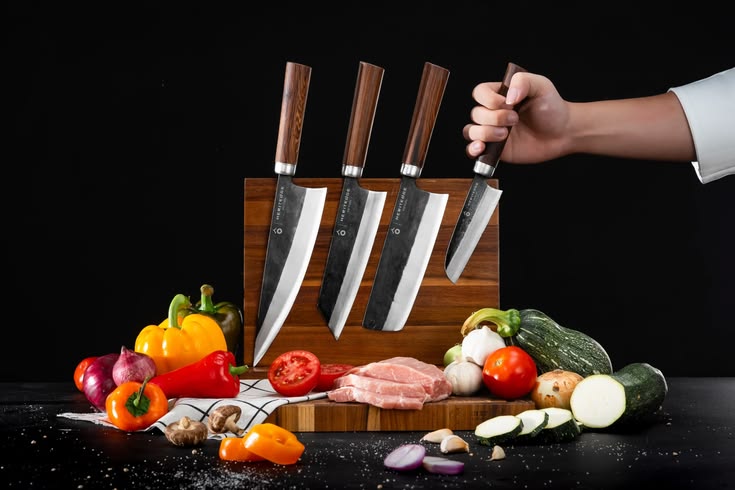
A good knife set can make everyday food preparation faster, more comfortable, and more precise. HexClad knife sets are designed around Japanese Damascus steel, hybrid construction, balanced handles, and sharp cutting edges, giving home cooks several features to consider when upgrading their kitchen cutlery. HexClad’s current knife collection includes sets ranging from compact starter options to larger collections with chef, santoku, utility, paring, bread, carving, and steak knives.
For U.S. home cooks, choosing the right set should be about more than the number of pieces in the box. Blade material, knife selection, handle comfort, maintenance requirements, storage, and the types of food you prepare regularly can all influence whether a particular set fits your kitchen.
What Should You Look for in HexClad Knife Sets?
The first step in this kitchen knife buying guide is to think about how you actually cook. A larger set is not automatically more useful if several knives rarely leave the block.
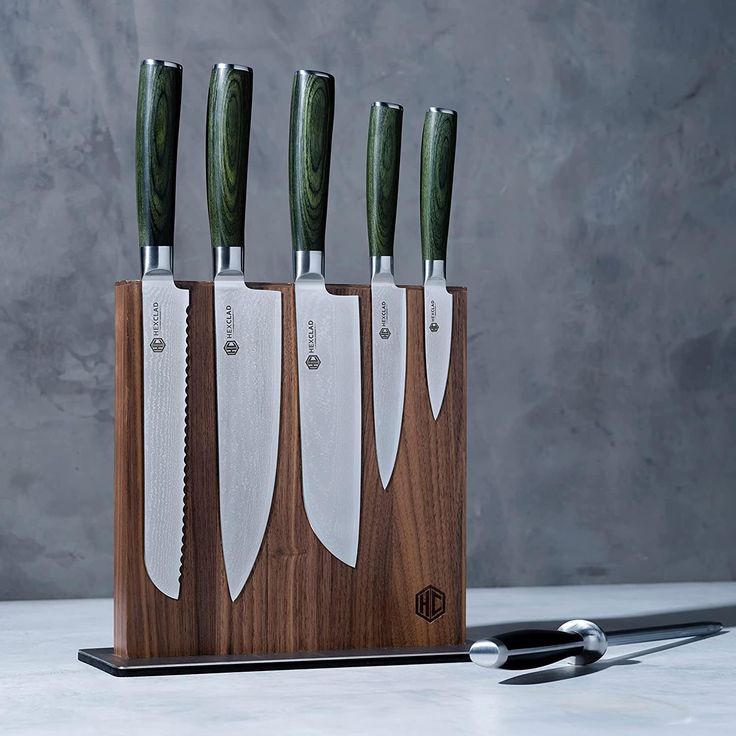
A practical collection should include the blades you use most often and complement your cooking habits. HexClad’s current six-piece Damascus set, for example, includes an 8-inch chef’s knife, 7-inch santoku, 5-inch utility knife, 3.5-inch paring knife, 8-inch serrated bread knife, and 9-inch honing rod.
Consider These Features
- Blade material: Look for durable steel and consistent construction.
- Knife selection: Make sure the set covers your everyday preparation tasks.
- Sharpness: A well-finished edge can improve slicing and chopping.
- Balance: The knife should feel controlled in your hand.
- Handle: An ergonomic knife handle can reduce discomfort during extended prep.
- Maintenance: Check cleaning, drying, honing, and storage requirements.
- Set size: Choose based on actual cooking needs rather than piece count alone.
HexClad Knives and Japanese Damascus Steel
One of the defining characteristics of HexClad knives is their use of Japanese Damascus steel. HexClad states that its blades are forged from 67 layers of Japanese Damascus steel and use an AUS10 steel core.
The layered construction is not simply a decorative feature. HexClad describes its approach as combining Japanese knife-making techniques with German engineering principles, while the company says its blades are designed to provide strength, flexibility, and a sharp cutting edge.
HexClad also lists a Rockwell hardness rating of 60 or higher for its Damascus knife blades. Hardness can contribute to edge retention, although it is only one part of overall knife performance.
Why Blade Construction Matters
When comparing Damascus steel knives, consider:
- Number and type of steel layers.
- Core steel.
- Heat treatment.
- Blade hardness.
- Edge geometry.
- Construction quality.
- Intended use.
A high layer count alone should not determine your purchase. The complete construction and how the knife feels during actual food preparation are equally important.
Choose the Right Chef Knife
The chef knife is generally the workhorse of a kitchen. It can handle many everyday tasks, including chopping vegetables, slicing proteins, mincing herbs, and preparing larger ingredients.
HexClad’s current 6-piece set includes an 8-inch chef’s knife with a 7.5-inch blade. The company describes it as a go-to knife for slicing and chopping, including harder vegetables and proteins.
For many home cooks, an 8-inch chef knife provides a useful balance between cutting capacity and maneuverability.
However, hand size and personal preference matter. Someone who prefers more compact blades may find a 7-inch santoku easier to control.
Chef Knife vs. Santoku: Which Do You Need?
A santoku is another versatile option for everyday preparation. HexClad’s 7-inch santoku has a less pointed profile than its chef knife and is designed for cutting vegetables, herbs, and other ingredients.
Consider a chef knife if you prefer:
- A traditional Western-style blade.
- A pointed tip.
- Rocking-style chopping.
- A versatile all-purpose knife.
A santoku may appeal to cooks who prefer:
- A shorter blade.
- A less pointed tip.
- Straight-down chopping motions.
- Vegetable-heavy preparation.
If you are purchasing a HexClad knife set, having both can give you flexibility without needing to choose one style permanently.
Look at the Smaller Kitchen Blades
A useful knife set buying guide should not focus exclusively on the largest blade. Smaller kitchen blades can be just as important for everyday preparation.
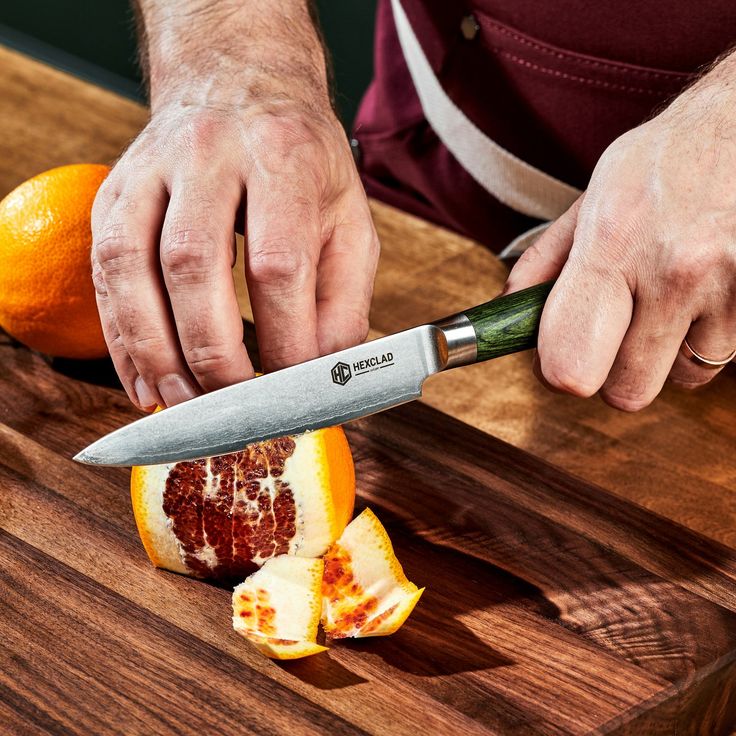
A paring knife is useful for detailed tasks such as peeling, coring, trimming, and preparing small fruits and vegetables. HexClad’s current Damascus paring knife has a 3.2-inch blade.
The utility knife sits between a chef knife and paring knife in size. It can be useful when a chef knife feels unnecessarily large for a particular ingredient.
Useful Smaller Knives Include
- Paring knife: Small precision work.
- Utility knife: Everyday medium-sized ingredients.
- Santoku: Vegetables and general preparation.
- Serrated bread knife: Bread and foods with delicate or firm exteriors.
Having several blade sizes means you can choose the tool that matches the ingredient rather than forcing every task onto one knife.
Don’t Ignore Knife Sharpness
Knife sharpness directly affects how easily a blade moves through food. A sharp knife can make slicing and chopping more controlled, while a dull blade may require excessive pressure.
HexClad says its Damascus knives are hand-sharpened using a three-step Honbazuke process and finished with a 12-degree edge.
The company also includes a honing rod with several of its knife sets. HexClad describes the rod as a hardened carbon-steel tool designed to realign the knife edge.
Sharpness Maintenance Checklist
- Use a suitable cutting board.
- Hone the blade regularly when appropriate.
- Avoid cutting on hard surfaces.
- Do not use knives for prying or twisting.
- Keep blades stored safely.
- Hand-wash and dry them according to manufacturer instructions.
HexClad specifically recommends hand-washing its knives with gentle dish soap and drying them immediately.
Consider the Ergonomic Knife Handle
The blade is only half of a kitchen knife. The ergonomic knife handle influences control, comfort, and balance.
HexClad’s current Damascus knives use resin-infused pakkawood handles. The company says the material is designed to resist cracking while providing a comfortable grip.
The handles should feel natural in your hand rather than forcing your fingers into an awkward position.
Pay attention to:
- Grip comfort.
- Handle thickness.
- Weight distribution.
- Bolster design.
- Overall knife balance.
- Ease of control during repetitive chopping.
HexClad also uses a steel bolster and full hybrid tang construction in its Damascus knives, which the company says improves balance and control.
FAQs About HexClad Knife Sets
Are HexClad knives made from Damascus steel?
Yes. HexClad states that its Damascus knife blades are forged from 67 layers of Japanese Damascus steel and use an AUS10 steel core.
What knives are included in a HexClad knife set?
The exact contents depend on the set. A current six-piece collection includes a chef knife, santoku, utility knife, paring knife, serrated bread knife, and honing rod. Larger collections can add carving or other specialized knives.
Are HexClad knives dishwasher safe?
HexClad recommends hand-washing its knives with gentle dish soap and drying them immediately. Dishwasher damage is excluded from the company’s cutlery warranty.
How sharp are HexClad knives?
HexClad states that its Damascus knives are hand-sharpened using the three-step Honbazuke method and finished with a 12-degree edge.
What is the best HexClad knife for everyday cooking?
For many home cooks, an 8-inch chef knife is a practical all-purpose choice. A santoku can be an alternative for cooks who prefer its shorter, less pointed blade profile.
Conclusion: Choosing the Right HexClad Knife Sets
The best HexClad knife sets should match the way you actually cook rather than simply offering the highest number of pieces. Start with the essentials: a versatile chef knife or santoku, a paring knife, and any specialty blades you genuinely use.
For U.S. home cooks upgrading their kitchen cutlery, the right set should also be comfortable to hold, easy to maintain, safely stored, and suited to everyday preparation.
Explore HexClad knife sets, compare the available configurations, and choose the collection that gives your kitchen the blades you will actually use.