








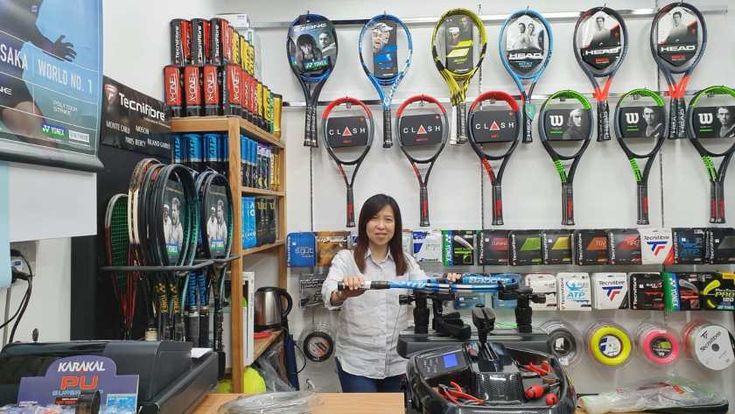
The Tennis-Point stringing service can be useful for players who want to maintain their racket’s feel, control, comfort, and consistency. Tennis strings have a direct influence on how a racket responds to the ball, while factors such as string type, gauge, and tension can change the playing experience considerably. A proper tennis racket stringing setup should therefore match your playing style, racket specifications, experience level, and personal preferences.
For players in Germany and across Europe, choosing the right stringing setup can also make regular racket maintenance more predictable. Whether you need routine racket restringing or are experimenting with a new string configuration, understanding the basics can help you communicate what you want from a professional stringing service.
What Is the Tennis-Point Stringing Service?
The Tennis-Point stringing service is designed around the process of replacing or installing tennis strings in a racket. Professional stringing is more than simply putting new strings into the frame. The stringer needs to work with the racket’s recommended specifications and the player’s requested setup.
A suitable setup can consider:
- Racket model and head size
- Recommended string pattern
- Tennis string material
- String gauge
- Tennis string tension
- Playing style
- Desired level of control, power, spin, or comfort
- Player experience and physical preferences
The objective is a consistent string bed that performs as intended and complements the racket.
Why Does Tennis Racket Stringing Matter?
Strings are one of the most active components of a tennis racket. They deform when the ball contacts the string bed and then return energy to the ball. This interaction affects how the racket feels and how easily a player can generate power, control, and spin.
Over time, strings lose tension and their playing characteristics can change. Even if the strings are not visibly broken, a player may notice that the racket feels different from when it was freshly strung.
Professional tennis racket stringing can help restore a more predictable response.
Signs You May Need Racket Restringing
You may want to consider restringing when:
- Strings have broken.
- The racket feels noticeably different.
- String movement has increased significantly.
- Control feels less consistent.
- The string bed feels unusually soft or dead.
- You have played frequently since your last restring.
- You are preparing for an important tournament or competition.
The ideal restringing schedule varies according to playing frequency, string type, tension, and personal preference.
Tennis-Point Racket Service: Choosing the Right String
The Tennis-Point racket service can be approached differently depending on what you want from your racket. There is no single tennis string that is ideal for every player.
Common string categories include polyester, multifilament, synthetic gut, and natural gut. Each has different characteristics.

Polyester Strings
Polyester is widely used by competitive players who want control and spin potential.
Typical characteristics include:
- Firm response
- Strong control
- Good spin potential
- Relatively durable construction
- Suitable for aggressive baseline play
However, polyester can feel firmer than softer string constructions, so players should consider comfort and tension carefully.
Multifilament Strings
Multifilament strings are designed to provide a softer, more elastic response.
They can be attractive to players who prioritize:
- Comfort
- Feel
- Easier power
- Reduced harshness
- A softer string-bed response
They may also be worth considering for recreational players or anyone who prefers a more forgiving setup.
Synthetic Gut and Natural Gut
Synthetic gut can provide a balanced combination of playability and affordability. Natural gut is known for its elasticity, feel, and power, although it is typically positioned as a premium string option.
The best choice depends on your racket, playing style, budget, and desired performance.
Tennis String Tension: What Should You Choose?
Tennis string tension is one of the most important variables in racket setup. Higher and lower tensions can produce noticeably different responses.
A lower tension generally allows the string bed to feel more lively and can contribute to easier power. A higher tension can provide a firmer response and may give some players a greater sense of control.
However, tension should not be selected independently of the racket and string.
Factors That Affect String Tension
Consider:
- Your racket manufacturer’s recommended range.
- Your chosen string material.
- String gauge.
- Your playing style.
- Your preferred level of power.
- Your preferred level of control.
- Comfort requirements.
If you are changing from a soft multifilament to a firm polyester, for example, simply keeping the same numerical tension may not produce the same playing experience.
String Gauge and Racket Performance
String gauge refers to the thickness of the string. Gauge numbering systems can differ between manufacturers, so checking the specific product’s stated thickness is useful.
Thinner strings can provide a more responsive feel and may help with spin and ball bite, while thicker strings can generally provide greater durability.
Your choice should depend on how frequently you break strings and what type of response you prefer.
Choosing a Gauge
A player looking for:
- More durability: may consider a thicker string.
- More responsiveness: may prefer a thinner option.
- More spin potential: may consider a thinner polyester or spin-oriented string.
- Balanced performance: can choose a middle gauge based on the string model.
There is always a trade-off between durability, feel, and performance characteristics.
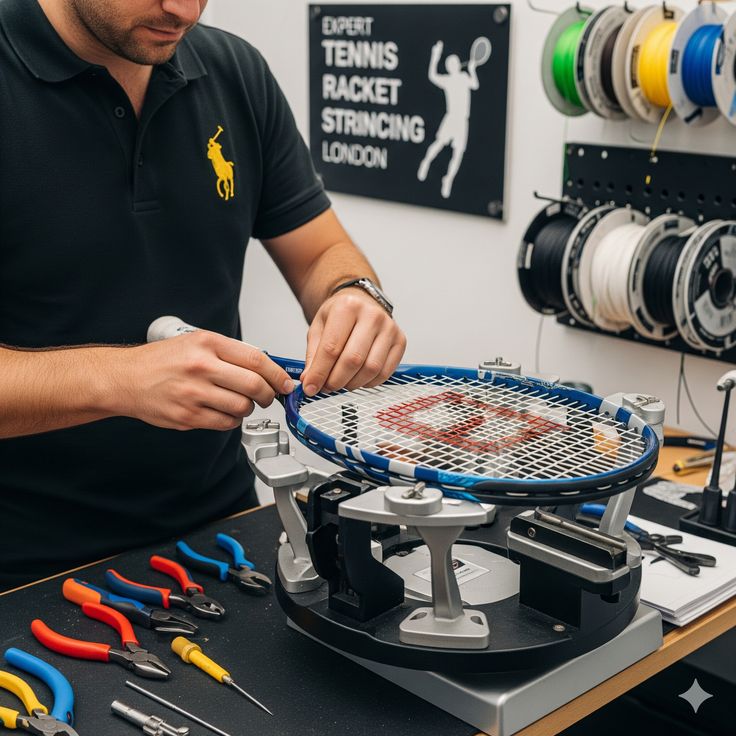
Spin Control and String Selection
Modern tennis relies heavily on topspin, particularly for baseline players. String choice can contribute to the way the racket interacts with the ball.
A textured or shaped polyester can provide a different ball interaction compared with a smooth multifilament string.
However, spin control is not determined by the string alone. Racket head speed, technique, racket pattern, string tension, and contact point all contribute to spin production.
This is why a professional stringing setup should be considered as part of the player’s overall equipment rather than as an isolated performance upgrade.
Tennis-Point Stringing Service for Different Players
The ideal Tennis-Point stringing service setup can differ significantly between a beginner and an advanced player.
A beginner may benefit from a comfortable, forgiving string setup that provides easy power. An experienced player may have more specific requirements involving tension, spin, control, or durability.
Match the Setup to Your Style
Beginners:
Focus on comfort, forgiveness, and easy power.
Recreational players:
Look for a balanced combination of comfort, control, durability, and price.
Aggressive baseliners:
May prioritize spin, control, and durability.
Competitive players:
Often have specific preferences for string type, gauge, tension, and feel.
There is no requirement to choose the most expensive string. The best setup is the one that matches your actual needs.
FAQs About Tennis-Point Stringing Service
What is the Tennis-Point stringing service?
The Tennis-Point stringing service provides racket stringing as part of tennis equipment servicing. The appropriate setup depends on the racket and the player’s requested string configuration.
How often should I restring my tennis racket?
It depends on how often you play, your string type, tension, and playing conditions. Frequent players generally need racket restringing more often than occasional players.
What tennis string is best for beginners?
A comfortable multifilament or synthetic-gut setup can be a suitable starting point for many beginners, although the final choice should consider the racket and player’s preferences.
What does tennis string tension change?
Tension influences the feel and response of the string bed. Lower tensions can provide a livelier response, while higher tensions can feel firmer. The ideal tension depends on the racket and string.
Does string gauge affect spin?
It can. Thinner strings can offer a more responsive string bed and may provide greater ball interaction, while thicker strings generally emphasize durability. Technique remains a major factor in spin production.
Conclusion: Get More From Your Racket With the Right Setup
The Tennis-Point stringing service can help players maintain a consistent and personalized racket setup. Choosing the right tennis strings, gauge, and tennis string tension can influence comfort, control, spin, power, and overall racket performance.
Instead of choosing a string purely because it is popular, consider how often you play, your technique, preferred feel, string-breaking frequency, and the specifications of your racket. A well-matched setup can make your equipment feel more predictable and better suited to your game.
Ready to refresh your racket? Explore Tennis-Point’s racket service and choose a stringing setup that matches the way you play.