







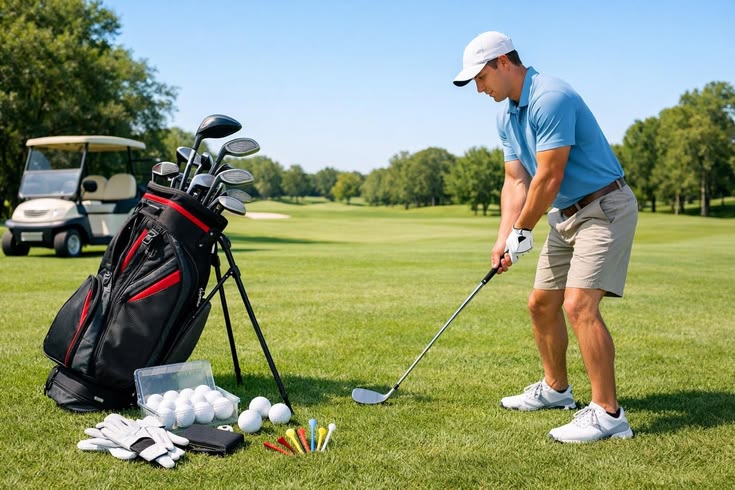
Choosing the right SCHEELS golf rangefinders can make distance management much easier on the course. Whether you play casually on weekends or regularly compete, a reliable golf distance finder can help you identify yardages to the flag, hazards, and other targets before choosing a club. SCHEELS currently offers golf rangefinders and GPS devices from brands including Bushnell, Garmin, Leupold, Vortex, and Shot Scope, giving golfers several technology options to consider.
The key is not simply buying the device with the most features. Your choice should match the courses you play, how quickly you want yardages, and whether you prefer laser precision, GPS mapping, or a combination of both.
What Are SCHEELS Golf Rangefinders?
SCHEELS golf rangefinders are distance-measuring devices designed to help golfers understand course measurements. Laser models typically allow you to target a flag or object directly, while GPS rangefinders use satellite positioning and course data to display distances and layouts.
SCHEELS categorizes golf technology around different needs, including precise pin distances from rangefinders and broader course-layout information from GPS devices.
For many golfers, the decision comes down to these two formats:
- Laser rangefinder: Measures the distance to a specific target.
- GPS rangefinder: Shows course information and distances using GPS data.
- Hybrid rangefinder: Combines laser measurements with GPS information.
- Rangefinder watch: Provides distances and other golf data directly from the wrist.
Decide Between Laser and GPS Technology
The first step in this golf rangefinder buying guide is deciding how you want to receive yardages.
A laser rangefinder is useful when you want a precise measurement to a visible target. You can aim at the flag, bunker edge, tree, or another point and receive a distance reading. This makes laser devices particularly useful when you want to make a club-selection decision based on a specific target.
GPS devices work differently. Instead of physically aiming at a target, they use course maps and satellite positioning to provide information such as front, middle, and back distances.
When should you choose each?
- Choose laser if you regularly target flags and specific hazards.
- Choose GPS if you prefer a quick overview of the hole.
- Choose hybrid if you want both direct targeting and mapped course information.
- Choose a golf watch if you want hands-free access to yardages.
For example, SCHEELS carries hybrid technology such as the Bushnell Tour Hybrid, which combines laser distances with GPS-powered front, center, and back yardages.
Look at Accuracy and Measurement Range
Accuracy is one of the most important specifications when comparing SCHEELS golf rangefinders. A rangefinder is only useful if it consistently provides dependable distances.
Many modern models advertise accuracy within approximately one yard. For example, the Shot Scope PRO L2 listed by SCHEELS provides accuracy to one yard, a range of up to 700 yards, and 6x magnification.
However, maximum range should not be your only consideration. Golfers should also look at how easily the device locks onto the flag and how well it performs in real course conditions.
Consider:
- Accuracy at typical golfing distances
- Maximum stated range
- Flag-locking capability
- Target detection speed
- Measurement in yards or metres
- Performance against trees and other background objects
A very long maximum range does not automatically make a rangefinder more useful for everyday golf.
Consider Slope Technology
Slope technology is another major feature to examine. Standard distance tells you how far away the target is, while slope compensation can account for elevation changes to provide a more useful “plays-like” distance.
This can be particularly helpful on courses with significant hills or downhill approaches.
Several SCHEELS-listed devices include slope functionality. The Shot Scope PRO L2, for example, uses adaptive slope technology and includes a switch that allows golfers to turn the feature off for tournament use.
When shopping, check whether the device offers:
- Slope-adjusted distances
- A visible slope indicator
- Easy slope activation/deactivation
- Tournament-compliant mode
- Elevation information
Remember that tournament rules can restrict the use of slope-adjusted measurements, so a physical or electronic slope switch can be an important feature for competitive golfers.
Don’t Ignore Battery Life and Durability
A sophisticated rangefinder is not useful if the battery runs out halfway through your round. Battery type and expected runtime should therefore be part of your SCHEELS golf gear comparison.
Some laser models use replaceable batteries, while others have rechargeable integrated batteries. The Bushnell A1-Slope, for example, has an integrated rechargeable battery that Bushnell states can last more than 50 rounds on a full charge.
For regular outdoor use, also consider:
- Water resistance
- Shock-resistant construction
- Carrying case
- Cart-mounting magnet
- Weight
- Grip texture
- Battery replacement or charging method
Weather resistance is particularly useful if you frequently play in changing conditions.
Look for Quick Target-Lock Features
Speed can make a noticeable difference during a round. You do not want to spend several seconds trying to locate the flag every time you need a yardage.
Features such as target-lock vibration, scan modes, rapid-fire detection, and stabilization can simplify the process.
The Shot Scope PRO LX+ available through SCHEELS combines laser and GPS functionality with target-lock vibration, rapid-fire detection, 7x magnification, and accuracy to one yard.
For a faster experience, prioritize:
- Rapid target detection
- Flag-lock confirmation
- Vibration feedback
- Scan mode
- Easy-to-use controls
FAQ
Are SCHEELS golf rangefinders suitable for beginners?
Yes. Beginners can choose simple laser models that provide straightforward distance measurements without requiring advanced GPS or performance-tracking features.
What is better for golf: laser or GPS rangefinders?
They serve different purposes. A laser rangefinder is designed for targeting a specific object, while GPS provides broader course information. Hybrid models combine both approaches.
Is slope technology useful on a golf rangefinder?
Yes, especially on courses with elevation changes. Slope compensation can provide adjusted distances that account for uphill or downhill shots. However, golfers should check competition rules and use tournament-legal mode when required.
How accurate should a golf distance finder be?
Many modern golf rangefinders advertise accuracy around one yard. For example, the Shot Scope PRO L2 listed at SCHEELS specifies accuracy to one yard.
Do golf rangefinders work in bad weather?
Many models are designed with water-resistant construction, but the level of protection varies. Always check the individual product’s specifications before playing in heavy rain.
Final Thoughts on SCHEELS Golf Rangefinders
The right SCHEELS golf rangefinders should match the way you actually play. Focus first on reliable distance measurement, then consider features such as laser targeting, GPS mapping, slope technology, magnification, target lock, battery life, and weather resistance.
If you are ready to upgrade your golf accessories, compare the available specifications carefully rather than choosing solely by price or the number of features.
Explore SCHEELS golf rangefinders and find a golf distance finder that fits your course strategy, playing style, and budget.