







Affiliate Disclosure: This article may contain affiliate links. If you purchase through these links, we may earn a commission at no additional cost to you. Our recommendations remain based on independent research and real-world evaluation.
The VPN Market in 2026: Premium Brands vs Value Challengers
The VPN market has matured dramatically over the past decade. What was once a niche privacy tool used primarily by security professionals is now a mainstream cybersecurity solution used by millions of everyday internet users.
But with dozens of VPN providers claiming military-grade encryption, ultra-fast servers, and unbeatable privacy, choosing the right one has become increasingly difficult.
Two names dominate most conversations:
- NordVPN
- ExpressVPN
These companies built their reputation through strong infrastructure, global server networks, and aggressive marketing.
However, a new generation of providers has started challenging these premium leaders by offering similar capabilities at far more accessible prices.
One of the most prominent examples is Surfshark, a rapidly growing cybersecurity platform that has gained attention for its unlimited device policy, strong encryption stack, and competitive pricing.
The key question today is no longer simply:
Which VPN is the most popular?
Instead, the real question is:
Which VPN actually delivers the best balance of speed, security, and long-term value in 2026?
To answer that, we need to break down what truly matters in a modern VPN.
Security Architecture: The Foundation of Any Reliable VPN
Security remains the primary reason most users install a VPN. Without strong encryption and reliable protocols, a VPN becomes little more than a glorified proxy.
The top providers rely on a combination of modern encryption standards and advanced connection protocols.
Most premium VPNs now use:
- AES-256 encryption
- Secure tunneling protocols
- RAM-only server infrastructure
- DNS leak protection
Why “military-grade encryption” marketing can be misleading
Many VPN services advertise “military-grade encryption.” In reality, most reputable VPNs already use the same encryption standard. The difference lies in implementation and infrastructure.
Both NordVPN and ExpressVPN have invested heavily in proprietary infrastructure and auditing processes.
However, newer competitors like Surfshark now provide similar technical frameworks, including:
- modern protocols like WireGuard
- RAM-only servers
- multi-hop connection options
This means the security gap between premium and value VPNs has narrowed significantly.
For many users today, the real differentiator is not encryption strength but network performance and usability.
Speed Performance: The Factor That Changes Everything
A VPN can have flawless security but still fail users if speeds drop dramatically.
Streaming buffers. Downloads slow down. Gaming latency increases.
These problems usually happen when a VPN network struggles with:
- server congestion
- inefficient routing
- outdated protocols
Modern VPN providers combat this by deploying faster tunneling protocols.
One of the most important developments in recent years has been WireGuard, a lightweight protocol designed for both speed and security.
Many providers now offer their own implementations:
- NordLynx (NordVPN’s version of WireGuard)
- Lightway (ExpressVPN’s proprietary protocol)
- WireGuard implementations used by Surfshark
The surprising performance trend many users overlook
The assumption that expensive VPNs always deliver faster speeds is increasingly outdated.
Thanks to newer infrastructure and optimized networks, Surfshark has emerged as a strong competitor in speed benchmarks, especially for:
- streaming platforms
- large file downloads
- international server connections
This performance improvement has led many users to reconsider a long-held assumption:
Does paying more actually guarantee a better VPN anymore?
In many real-world cases, the answer is no.
Server Networks and Global Access
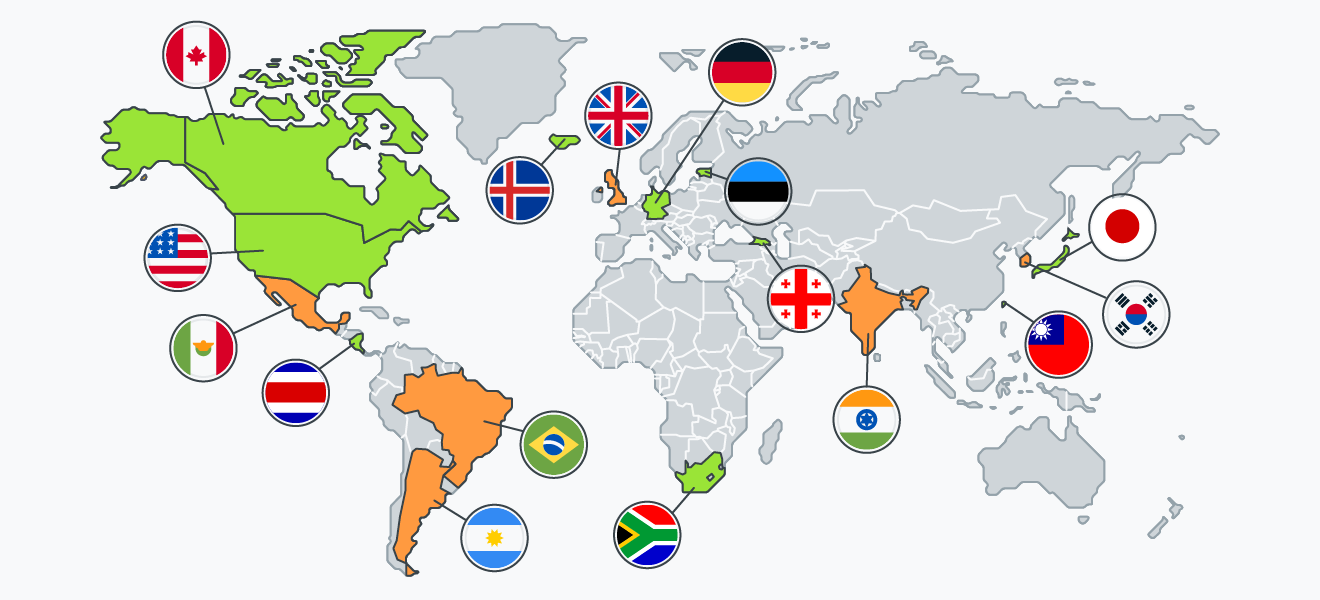
Another factor frequently used to judge VPN quality is the size of the server network.
Large server networks help VPNs deliver:
- better global access
- reduced congestion
- more location choices
Both NordVPN and ExpressVPN maintain extensive server networks spanning dozens of countries.
However, sheer server count is not always the best metric.
What matters more is:
- network optimization
- server distribution
- load balancing
This is where Surfshark has quietly built a strong reputation.
Despite launching years after its competitors, the company expanded its infrastructure rapidly while maintaining strong performance across regions.
For users who frequently connect internationally, the most important factors are:
- connection stability
- consistent speeds
- minimal latency
When these elements are optimized properly, a smaller but well-optimized network can outperform larger but congested ones.
Device Support and Simultaneous Connections
One of the most overlooked factors when choosing a VPN is device limits.
Many providers restrict how many devices can connect simultaneously.
Typical limits look like this:
- 5 devices
- 6 devices
- 8 devices
This becomes frustrating for households with multiple users or for professionals who use several devices.
A single user might already have:
- a laptop
- a phone
- a tablet
- a smart TV
- a work computer
The unlimited device advantage
This is where Surfshark introduced one of the most disruptive policies in the VPN industry.
Instead of limiting devices, Surfshark allows unlimited simultaneous connections on one account.
For families, remote workers, and digital nomads, this feature alone can significantly increase the value of the subscription.
Instead of purchasing multiple accounts, users can secure every device they own under a single plan.
This seemingly simple feature has quietly become one of the strongest reasons many users switch VPN providers.
Pricing and Long-Term Value
VPN pricing varies widely across the industry.
Premium brands often position themselves as high-end security tools, which can result in higher subscription costs.
For example, some providers charge significantly more for monthly plans while offering better deals only on longer commitments.
In comparison, Surfshark has positioned itself as a value-focused premium VPN.
Its long-term pricing is often substantially lower than competitors while still delivering features typically found in higher-priced services.
This pricing model has made the service especially appealing for users who want:
- strong privacy protection
- modern infrastructure
- multi-device flexibility
without committing to expensive long-term subscriptions.
The hidden value factor many comparisons miss
When evaluating VPNs, many comparisons focus only on the base VPN.
However, some services now bundle additional cybersecurity tools.
Surfshark, for example, offers extended plans that include:
- antivirus protection
- private search
- data breach alerts
- identity protection tools
These bundles can change the value equation significantly, especially for users who would otherwise purchase separate security software.
Privacy Policies and Transparency

VPN companies frequently promote “no-logs policies.”
But what does that actually mean?
A no-logs policy generally indicates that the VPN provider does not store records of:
- browsing activity
- IP addresses
- connection timestamps
However, transparency is equally important.
Some companies undergo independent security audits to verify their privacy claims.
Both NordVPN and ExpressVPN have invested heavily in external audits and transparency initiatives.
Newer competitors such as Surfshark have also adopted similar transparency practices to build credibility in a competitive market.
For privacy-focused users, the most important takeaway is this:
A trustworthy VPN must combine strong encryption, transparent policies, and reliable infrastructure.
No single feature alone defines a secure service.
The Verdict: Which VPN Offers the Best Overall Value in 2026?
Choosing a VPN ultimately depends on your priorities.
If you value:
- established brand reputation
- long-standing infrastructure
- premium positioning
then services like ExpressVPN and NordVPN remain strong contenders.
However, the VPN landscape has evolved dramatically.
Newer competitors now deliver comparable security, fast performance, and significantly better pricing structures.
This shift has made Surfshark one of the most compelling options for users who want modern VPN capabilities without paying premium brand prices.
Between its:
- unlimited device connections
- competitive long-term pricing
- expanding cybersecurity ecosystem
the service has positioned itself as a strong alternative to traditional VPN leaders.
For users comparing VPNs in 2026, the real takeaway is simple:
The best VPN is no longer just the most expensive one.
Instead, the smartest choice is the service that balances security, performance, and value in a way that fits your real-world usage.
And in that category, Surfshark has quickly become one of the most interesting contenders in the entire VPN market.